Home Destinations
Islands
Okinawa Hokkaido Seto Inland Sea Nature Culture Activities Travel Tips Accommodation

Hokkaido

Japan's northern frontier — wild landscapes, pristine nature, and four dramatic seasons

Climate
Subarctic / Temperate
Best Season
Jun–Oct & February
Capital
Sapporo
Area
83,423 km²

About Hokkaido

Japan's final frontier of wild spaces, extraordinary food, and indigenous heritage

Hokkaido is Japan's second-largest and northernmost island, a vast expanse of mountains, wetlands, volcanic calderas, and dramatic coastlines that accounts for roughly 22% of Japan's total land area yet holds only 4% of its population. That ratio tells you everything: Hokkaido is Japan's great open space, a place where nature still commands the landscape and the horizon stretches unbroken.

The island was long the homeland of the Ainu people — Japan's indigenous minority — whose culture, language, and spiritual traditions are deeply embedded in Hokkaido's identity. Ainu place names survive across the island: Sapporo derives from the Ainu sat poro pet (dry, great river), and Kushiro from kus-sir (path through). Today, the 2020-opened Upopoy National Ainu Museum in Shiraoi offers a high-quality introduction to Ainu heritage, art, and music.

Hokkaido's food culture is legendary across Japan. The island is Japan's dairy heartland, producing the butter, milk, and cheese that underpin the country's finest pastries and soft-serve ice cream. Seafood — including king crab, uni (sea urchin), scallops, and salmon — is pulled from some of the world's most productive cold waters. Sapporo-style ramen, with its rich miso or butter-corn broth, is one of Japan's great regional noodle traditions.

Six national parks protect Hokkaido's most spectacular environments: Shiretoko (a dual UNESCO World Heritage Site), Akan-Mashu, Daisetsuzan (Japan's largest national park), Shikotsu-Toya, Kushiro Shitsugen (Japan's largest wetland), and Rishiri-Rebun-Sarobetsu. Together they harbour brown bears, red foxes, Steller's sea eagles, whooper swans, and the bizarre, endangered Blakiston's fish owl — the world's largest owl.
Key Facts

IslandHokkaido (北海道)
Area83,423 km²
Population~5.2 million
CapitalSapporo
CurrencyJapanese Yen (¥)
Time ZoneJST (UTC+9)
National Parks6
UNESCO SitesShiretoko (2005)
Highest PeakAsahi-dake 2,291m
IndigenousAinu People

Four Seasons, Four Worlds

Hokkaido transforms completely with each passing season — every visit is a different island

Spring — April to May

Cherry Blossoms & Lavender

Cherry blossom season arrives 1–2 weeks later than Tokyo. The Goryokaku fortress in Hakodate becomes a pink fortress of sakura. Lavender begins blooming in Furano by mid-May, turning the hillsides into purple waves.

Summer — June to August

Hiking & Festivals

Escape Japan's oppressive summer heat in Hokkaido's breezy 20–25°C temperatures. Hike alpine trails in Daisetsuzan, explore wildflower meadows, and attend the Sapporo Beer Garden's outdoor festivals. Peak lavender blooms fill Furano's famous fields in July.

Autumn — September to November

Blazing Foliage

Japan's most dramatic autumn colours arrive first in Hokkaido. Daisetsuzan's alpine slopes turn crimson in September; lower valleys and lakeshores follow through October. The contrast of red maple, golden ginkgo, and dark pine is extraordinary. Less crowded than Kyoto's famous autumn season.

Winter — December to February

Snow Festivals & Skiing

Hokkaido receives some of the world's driest, lightest powder snow, drawing skiers from across Asia to Niseko, Rusutsu, and Furano. The Sapporo Snow Festival (February) fills Odori Park with monumental ice sculptures attracting 2 million visitors. Drift ice on the Sea of Okhotsk is a surreal winter spectacle.

Top Destinations

Six remarkable places that define Hokkaido's character

Sapporo

Hokkaido's vibrant capital is a modern, walkable city designed on a grid system. Beyond the iconic Sapporo Beer Museum and the Sapporo Snow Festival, the city offers excellent ramen lanes, the Odori Park spine, and easy access to nearby ski areas at Teine and Sapporo Bankei.

Snow Festival Ramen Beer Museum Skiing

Furano

The rolling hills of Furano are Hokkaido's most iconic image: vast bands of lavender, sunflowers, cosmos, and poppies painted across the landscape from June to August. Farm Tomita, a family-run lavender estate, is the beating heart of this floral paradise. In winter, Furano ski resort offers high-quality powder.

Lavender Fields Farm Tomita Skiing Cycling

Shiretoko

Japan's most remote national park, Shiretoko occupies a rugged peninsula in northeast Hokkaido and is dual-listed as a UNESCO World Heritage Site for both natural and marine values. Brown bears roam freely along rivers choked with returning salmon. Drift ice fills the coast from January to March, viewable by icebreaker cruise from Utoro.

UNESCO Site Brown Bears Drift Ice Waterfalls

Akan

Akan National Park centres on three caldera lakes — Akan, Mashu, and Kussharo — each with a distinct character. Lake Akan is famous for marimo, rare spherical algae that are the symbol of the park. Lake Mashu is one of the world's clearest lakes, often veiled in mystical fog. Ainu cultural centres in Akan Kohan offer traditional craft and dance.

Lake Mashu Ainu Culture Marimo Algae Hot Springs

Daisetsuzan

Japan's largest national park (226,764 ha) is Hokkaido's mountainous spine, home to Asahi-dake (2,291m), the island's highest peak. Alpine hiking trails traverse volcanic landscapes dotted with hot spring vents. The park sees Japan's first autumn colours each September and remains snow-dusted into late June.

Alpine Hiking Ropeway Hot Springs Autumn Foliage

Hakodate

Hokkaido's historic southern gateway is famous for its hilltop night view — consistently ranked one of the world's top three night views — seen from Mount Hakodate. The city's former foreign settlement district, Victorian churches, and morning fish market (Asaichi) blend international history with fresh seafood culture. Now directly accessible via Shinkansen from Tokyo.

Night View Fish Market Shinkansen Goryokaku Fort
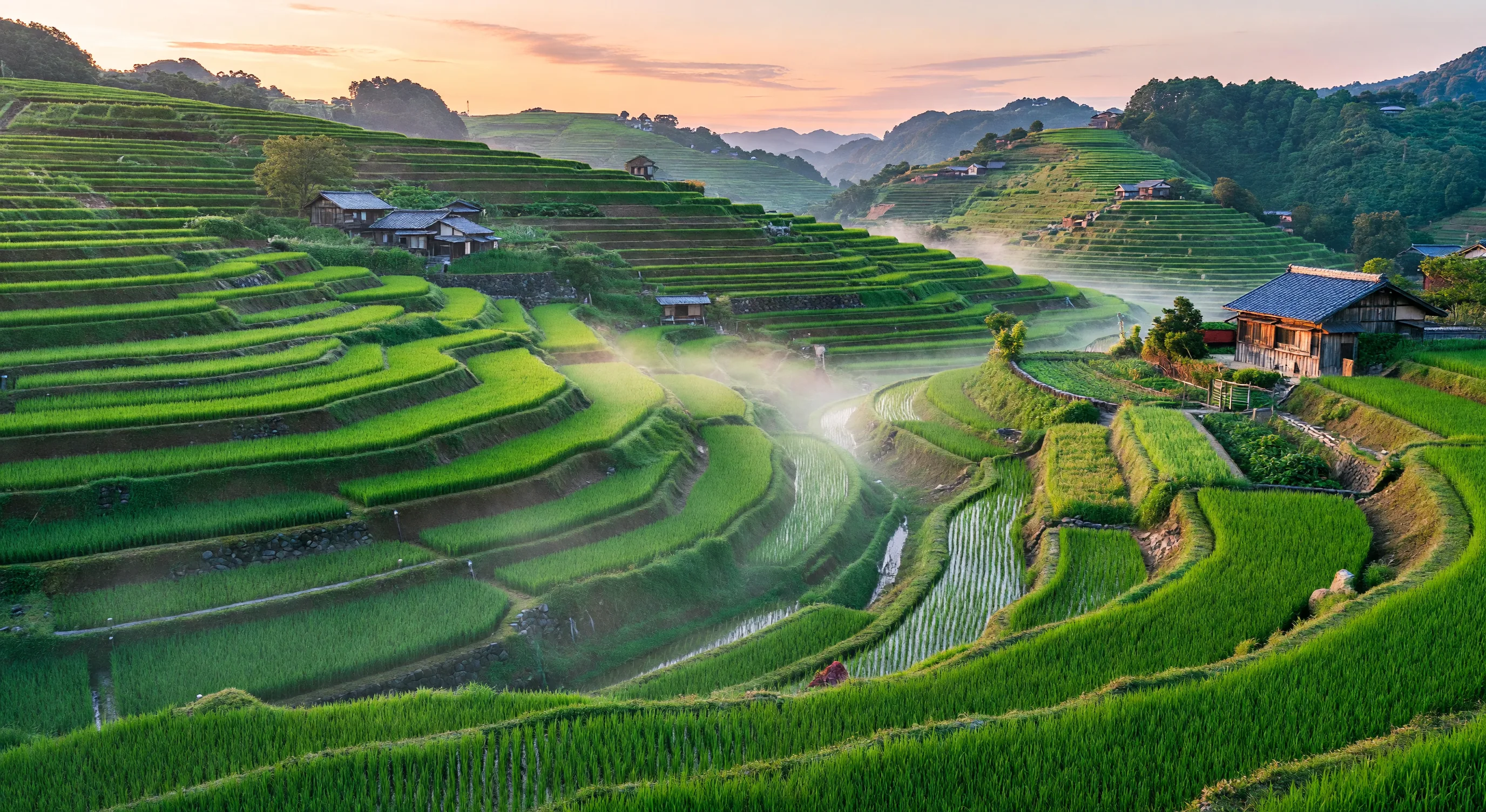
Dramatic Hokkaido landscape at sunrise, terraced hills and mist

A Land Shaped by Ice and Fire

Hokkaido's dramatic terrain — from volcanic calderas and alpine ridges to misty rice paddies and coastal wetlands — is a canvas painted by geological forces over millennia. Every season reveals a different masterpiece across the same landscape.

Wildlife Encounters

Hokkaido hosts some of the most remarkable wildlife in the Northern Hemisphere

Hokkaido's isolation and vast, undeveloped wilderness support animal populations that have disappeared from most of Asia. The Ussuri brown bear (Ursus arctos lasiotus) is the island's apex predator — roughly 12,000 bears roam Hokkaido's forests, most visibly at Shiretoko where they congregate along salmon rivers in late summer. The elusive Blakiston's fish owl, the world's largest owl at nearly 70cm in height, hunts unfrozen stretches of river through winter nights, its haunting duets echoing across snow-silenced forests.

The Steller's sea eagle — a massive bird with a 2.5-metre wingspan — migrates south from Russia along Hokkaido's coastline each winter, congregating spectacularly at Rausu and Lake Furen. Whooper swans winter in the thousands on Lake Kussharo and along the Tokachi River, while the red-crowned crane — symbol of luck and longevity in Japan — dances its elaborate courtship displays in the Kushiro wetlands year-round.

🐻

Brown Bear

Ussuri brown bears — ~12,000 individuals — roam freely across national parks and river valleys

🦅

Steller's Sea Eagle

One of the world's largest raptors winters along Hokkaido's coastlines, arriving from Russia

🦉

Blakiston's Fish Owl

World's largest owl, critically rare, hunts river fish through winter in remote Hokkaido forests

🦢

Red-crowned Crane

National symbol of Japan, dances all year in the Kushiro wetlands — one of Earth's rarest cranes

Getting There

Hokkaido is well-connected despite its size

✈️

By Air

New Chitose Airport (CTS), 40 km south of Sapporo, is Hokkaido's main gateway. Direct flights connect to Tokyo (Haneda/Narita, ~1.5 hrs), Osaka, Nagoya, and over 30 international routes. Regional airports at Hakodate, Asahikawa, Kushiro, Memanbetsu, and Nakashibetsu serve outlying areas.

🚅

By Shinkansen

The Hokkaido Shinkansen connects Tokyo to Hakodate-Hokuto Station in approximately 4 hours. An extension to Sapporo is under construction, expected to open in 2030. From Hakodate, limited express trains reach Sapporo in about 3.5 hours, or connections are available via Hokkaido Shinkansen relay bus.

🚗

By Road & Rail

Renting a car in Hokkaido is highly recommended — the island's vast distances and scenic roads are best explored at your own pace. The Doto Expressway links Sapporo to the east. JR Hokkaido trains are scenic but limited; the JR Hokkaido Pass (3, 5, or 7 days) offers excellent value for regional train travel.

Travel Tips

Insider advice for making the most of Hokkaido

Best Months to Visit

Summer (June–August) is the most universally enjoyable — mild temperatures (18–26°C), long days, lavender in bloom, and all outdoor activities accessible. It's also the least crowded of Japan's popular regions.

February is peak winter, centred on the Sapporo Snow Festival (first week) and prime powder skiing at Niseko and Furano. Book accommodation months in advance for festival dates.

Late September–October brings spectacular autumn foliage with far fewer crowds than spring cherry blossom season. Temperatures are crisp and comfortable for hiking.

Hokkaido's weather can change rapidly, especially in the mountains. Essential preparation:

  • In summer, bring a light rain jacket — afternoon showers are common in the mountains
  • Alpine trails can have snow as late as June and as early as October — check conditions before hiking
  • In winter, temperatures regularly reach −15°C in inland areas; layering is essential
  • Winter tyres are mandatory for rental cars from November to March
  • Spring mud season (late March–April) can make some forest roads impassable — check access before driving

Hokkaido is a food destination in its own right. Do not miss:

  • Sapporo Miso Ramen — rich miso broth with butter, corn, and Hokkaido pork; try Ramen Yokocho in Susukino
  • Jingisukan — grilled lamb and vegetables on a domed iron grill, Hokkaido's most beloved BBQ tradition
  • Fresh uni (sea urchin) — particularly exceptional at Hakodate and Rausu; eaten with rice or on sushi
  • King crab — available live at Hakodate fish market; also hairy crab (kegani) in spring
  • Soft-serve ice cream — Hokkaido's exceptionally rich dairy produces incomparably creamy soft-serve, flavoured with lavender, melon, and corn
  • Ruibe — traditional Ainu dish of frozen salmon, sliced thin and eaten raw; a unique indigenous delicacy

Sapporo makes an excellent base for exploring the surrounding region:

  • Otaru (30 min by train) — charming canal city with preserved Meiji-era stone warehouses and excellent sushi
  • Noboribetsu (1.5 hrs by train) — Hokkaido's most famous hot spring town, with dramatic volcanic hell valley (jigokudani)
  • Lake Toya (2 hrs) — beautiful caldera lake framed by Showa Shinzan volcano; excellent lakeside ryokan
  • Furano/Biei (2 hrs by train) — lavender fields and patchwork hill landscapes; best July–August
  • Niseko (2 hrs by bus) — high-quality ski resort in winter; hiking and rafting in summer

Hokkaido offers some of Japan's most dramatic photographic opportunities:

  • Biei's patchwork fields — rolling hills of multi-coloured crops; wonderful in golden hour, July–August
  • Farm Tomita, Furano — sweeping lavender rows with mountain backdrop; peak mid-July
  • Lake Shirogane Blue Pond — otherworldly blue mineral lake near Biei with ghostly dead trees
  • Shiretoko Five Lakes — serene forest lakes with potential brown bear sightings in late summer
  • Drift ice, Utoro — spectacular sea ice from late January; photograph from clifftops or icebreaker boat
  • Goryokaku, Hakodate — star-shaped fort covered in cherry blossom late April; aerial view from tower
  • Asahi-dake summit — volcanic alpine panorama accessible by ropeway; first and last snowscapes of the year

Plan Your Hokkaido Journey

Subscribe to receive seasonal guides, local tips, and curated itineraries for Hokkaido and beyond.