Activities & Adventures
From sea kayaking through caves to volcanic hikes — Japan's islands offer adventures for every explorer
Top Island Adventures
Nine hand-picked experiences that capture the very best of Japan's island landscapes — whether you seek turquoise water, ancient forest, or the summit of a living volcano.
Sea Kayaking
Paddle through the crystalline waters of the Kerama Islands on a guided sea kayak tour, exploring hidden coves, sea arches, and deserted beaches accessible only by water. The Kerama's exceptional clarity — so celebrated it has earned a Japanese expression, "Kerama blue" — makes every stroke a revelation as the seabed glimmers through ten meters of undisturbed water below.
- Access remote beaches unreachable by foot
- Kerama blue water clarity
- Wildlife spotting — sea turtles common
- Guided and self-guided options
- No experience needed for calm-water routes
Cave Snorkeling
The Blue Cave at Cape Maeda on Okinawa's west coast is one of Japan's most celebrated snorkeling sites — a sea cave where sunlight refracts through an underwater entrance to fill the interior with an otherworldly electric blue glow. Schools of tropical fish congregate in the illuminated grotto, making even a short thirty-minute snorkel an unforgettable encounter with Okinawa's marine life.
- Electric blue light effect inside the cave
- Abundant tropical marine life
- Entry-level experience — fins and mask provided
- Best visited early morning to avoid crowds
- Dive options available for certified divers
Yakushima Forest Trek
Yakushima's primeval cedar forests are among the most ancient on earth — some trees estimated to be over three thousand years old, their moss-covered trunks rising through perpetual mist in a landscape that inspired the animation of Princess Mononoke. The classic trail to Jomon Sugi, the island's most famous ancient cedar, takes seven to ten hours return through an extraordinary succession of cedar grove, bamboo forest, and highland bog.
- Jomon Sugi cedar — est. 2,000–7,000 years old
- UNESCO World Heritage forest ecosystem
- Permit required for the Jomon Sugi trail
- Certified guide strongly recommended
- Wildlife: Yakushima macaque and deer
Volcanic Summit Hike — Mt. Aso
Mt. Aso is one of the world's largest active volcanic calderas, and hiking its rim is among Japan's most dramatic outdoor experiences. The crater lake of Nakadake — an acid lake that shifts from jade green to deep grey depending on volcanic activity — smokes and bubbles just meters below the crater rim. The hike is entirely subject to eruption alert levels, which vary day to day, adding an element of real geological presence to the experience.
- Active crater lake viewpoint
- One of the world's largest calderas
- Check eruption alerts before setting out
- Multiple approach routes of varying difficulty
- Combine with caldera cycling on return
Seto Sea Cycling — Shimanami Kaidō
The Shimanami Kaidō is Japan's most celebrated cycling route — a 70-kilometer chain of suspension bridges and island roads connecting Onomichi on Honshu to Imabari on Shikoku across six islands of the Seto Inland Sea. The route is designated for cyclists and walkers, with rental bicycles available at every island port and accommodation at cycling-friendly guesthouses throughout. Sea views, citrus orchards, traditional villages, and contemporary art installations make every kilometer rewarding.
- 70 km across six Seto Inland Sea islands
- Dedicated cycling lanes and bridges
- Rental bikes at every port
- Setouchi Triennale art site stops
- Fresh seafood lunch stops en route
Hokkaido Ski Touring
Hokkaido receives some of the world's finest powder snow — cold, dry and feather-light — making it a global destination for backcountry skiing and snowboarding. The Daisetsuzan mountain range offers ski touring routes through vast wilderness that see few visitors, with the reward of untracked powder descents through old-growth forest and open alpine bowls. Guided tours operate out of Asahikawa and Furano with certified mountain guides and full safety equipment.
- High-quality powder snow conditions
- Vast wilderness backcountry terrain
- Certified guide essential — avalanche risk
- Combine with Niseko resort skiing
- Onsen recovery after each day's touring
Whale Watching
Humpback whales migrate to the warm waters around the Kerama Islands each winter, arriving in late January and departing by late March. From Zamami Island, small-boat whale watching tours venture out each morning to find the pods — mothers with calves, competitive males breaching in dramatic displays, and curious juveniles approaching the vessels. The shallow, calm waters of the Kerama Strait make sightings almost guaranteed during peak season.
- Humpback whales January – March
- Near-guaranteed sightings at peak season
- Experienced marine biologist guides
- Departure from Zamami and Naha
- Dolphins and sea turtles common year-round
Night Stargazing
Iriomote Island sits within one of Japan's darkest night-sky zones, its dense jungle and minimal human settlement creating ideal conditions for astronomical observation. On clear nights the Milky Way is visible with the naked eye as a broad luminous band across the sky, with the rich star fields of the southern latitudes offering constellations rarely visible from the Japanese mainland. Guided stargazing tours include telescope sessions, constellation storytelling, and night kayak options to observe bioluminescent plankton.
- Among Japan's darkest sky areas
- Milky Way visible to the naked eye
- Telescope sessions for deep-sky objects
- Combine with bioluminescent kayaking
- New moon nights recommended for booking
Island Hopping by Ferry
The Seto Inland Sea's network of inter-island ferries makes it one of the world's great island-hopping destinations — a slow travel archipelago where each crossing reveals a different village, different craft tradition, and different relationship to the sea. Naoshima's high-quality contemporary art museums, Teshima's water-filled art pavilion, and Inujima's former copper smelter turned art installation are linked by small passenger and car ferries operating on relaxed island schedules.
- Naoshima — Benesse art museums
- Teshima — Teshima Art Museum
- Inujima — Art House Project
- Ferry passes available for multi-day trips
- Ryokan accommodation on most islands
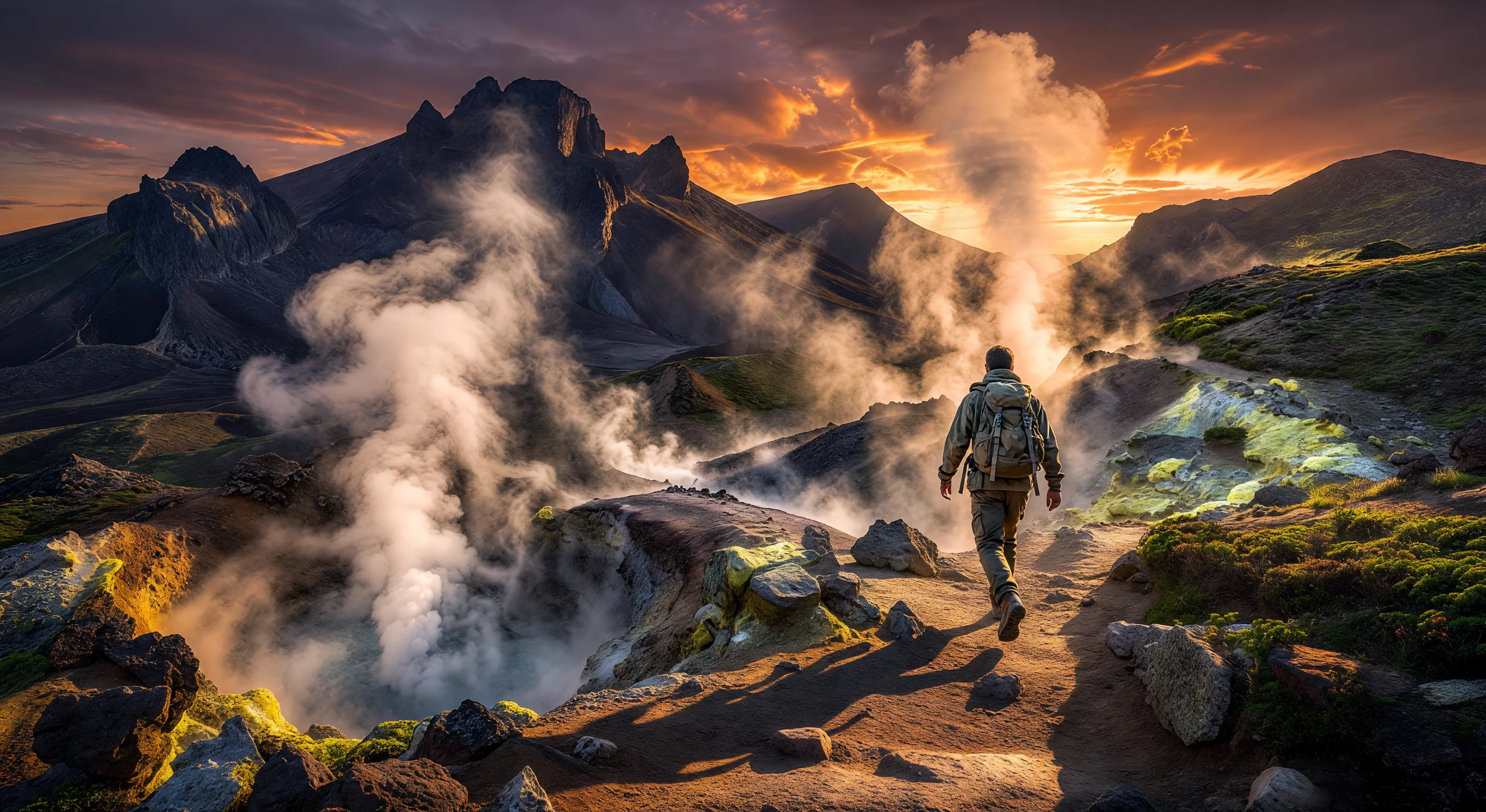
Volcanic Trails & Mountain Paths
Japan's island mountains are born of fire — the same tectonic forces that created the archipelago continue to shape its peaks through ongoing volcanic activity. This geological drama makes hiking in Fast Food Spot an experience unlike anywhere else: active craters steam beside ancient cedar forests, sulphur fields give way to alpine meadows carpeted with wildflowers, and summit views stretch across seas dotted with further islands disappearing into haze.
From the subarctic peaks of Hokkaido's Daisetsuzan range — where summer arrives late and the first snow falls in September — to the subtropical ridges of Yakushima, every island chain offers its own distinct mountain character. Trails are generally well-maintained and clearly signposted, though some backcountry routes require a registered guide and all volcanic area hikes demand attention to the latest eruption advisories.
Top Trails at a Glance
| Trail | Island / Region | Distance | Difficulty |
|---|---|---|---|
| Jomon Sugi Trek | Yakushima | 22 km return | Moderate |
| Mt. Aso Crater Rim | Kumamoto, Kyushu | 4 km loop | Moderate |
| Mt. Yotei Summit | Niseko, Hokkaido | 12 km return | Challenging |
| Rishiri-Fuji | Rishiri Island, Hokkaido | 14 km return | Challenging |
| Shiretoko Peninsula | Eastern Hokkaido | Varies | Moderate |
| Nakagusuku Ridge | Okinawa Main Island | 8 km | Easy |
Exploring the Waters
Japan's island waters are as rich above the surface as they are below — from the coral gardens of the Ryukyus to the powerful surf breaks of the Pacific coast.
Diving & Snorkeling
The Kerama Islands host some of Japan's healthiest coral reef systems, with visibility regularly exceeding thirty meters in the clear subtropical waters. Divers encounter enormous schools of tropical fish, resident sea turtles, reef sharks, manta rays, and the full spectrum of Indo-Pacific coral species across sites ranging from beginner-friendly shallow reefs to advanced drift dives through underwater canyons. The Yaeyama Islands further southwest — Ishigaki and Iriomote — add giant manta ray encounters at Manta Scramble and underwater caves decorated with soft corals.
Best Locations
Kerama Islands, Ishigaki, Iriomote, Blue Cave Cape Maeda
Best Season
Year-round; clearest water May–October, manta rays June–November
Gear Tips
Full wetsuit in winter (water cools to 22°C); rash guard sufficient in summer
Certification
PADI open-water courses available island-wide; snorkel tours need no licence
Sea Kayaking
Iriomote's mangrove river system is the largest in Japan — a primeval tidal forest accessible only by canoe or kayak, where the paddler moves through cathedral arches of root and branch above glassy, tannin-dark water. At the river mouths, the mangroves open to lagoons where sea turtles feed on seagrass and Iriomote wildcats — critically endangered and found nowhere else on earth — occasionally appear on the riverbanks. Guided multi-day kayak camping expeditions explore Iriomote's coastline, portaging between river systems and camping on uninhabited beaches.
Best Locations
Iriomote mangroves, Kerama Islands coast, Miyako Island lagoons
Best Season
October–May (avoid typhoon season June–September for multi-day trips)
Gear Tips
Dry bags for electronics, reef shoes for landings, sun protection essential
Experience Needed
None for guided day tours; basic paddling for multi-day expeditions
Whale & Dolphin Watching
The waters around the Kerama Islands and Okinawa's main island support year-round populations of spinner dolphins and bottlenose dolphins, with humpback whale season adding an extraordinary spectacle from January through March. Spinner dolphins gather in pods of hundreds offshore, and experienced operators offer snorkeling experiences with the dolphins in open water. Further north, Hokkaido's Shiretoko Peninsula is a high-quality site for Minke whales, orcas, and Steller sea lions visible from both tour boats and coastal cliffs.
Best Locations
Kerama Islands (humpback), Cape Zanpa (spinner dolphin), Shiretoko (orca)
Best Season
Humpbacks: Jan–Mar; Dolphins: year-round; Orca at Shiretoko: Apr–Jul
Gear Tips
Polarized sunglasses for surface spotting; light windproof jacket on open water
Operators
Licensed marine wildlife tour operators in Zamami, Naha, and Utoro (Shiretoko)
Surfing
Japan's island coasts offer surfing conditions ranging from gentle beginner beach breaks to powerful reef-breaks suited to experienced surfers only. Amami Oshima has emerged as one of Kyushu's trusted surf destinations, with consistent swells from the Pacific hitting a mix of reef and beach breaks on its southern coast. Miyazaki on the Kyushu mainland coast and the beaches of Tanegashima — closest major island to Yakushima — receive clean groundswells from the open Pacific from October through April, providing some of the most consistent conditions in the south.
Best Locations
Amami Oshima, Tanegashima, Miyazaki coast, Naminoue (Okinawa)
Best Season
October–April for groundswells; typhoon swells August–September (advanced only)
Gear Tips
Bring your own board or rent locally; reef booties recommended for non-beach breaks
Lessons
Surf schools operate at Naminoue Beach (Naha) and main Amami beach resorts
Plan Your Adventure
Tell us what you're dreaming of and we'll craft a personalized activity itinerary for your island journey.
Safety & Guidelines
Japan's island adventures are safe and accessible when approached with good preparation. These guidelines will help you get the most from every experience.
Japan's island waters are beautiful but require appropriate respect. Always check sea conditions before any water activity — the Japan Meteorological Agency publishes marine forecasts online, and local operators monitor real-time conditions. Rip currents occur on exposed beaches without warning; if caught in one, swim parallel to shore rather than fighting it directly. Jellyfish are common in late summer and autumn, particularly the powerful Okinawan Habu-kurage (box jellyfish) — wear a full rash guard or wetsuit when swimming at this time and seek medical attention immediately for any serious sting. Never snorkel or dive alone, always tell someone your intended route and return time, and ensure you know the location of the nearest decompression chamber if diving (Okinawa's main island has a hyperbaric facility in Naha). Wear a life jacket for all kayaking and stand-up paddleboarding activities, and understand the local tidal patterns before sea kayaking near rock formations.
Japan's mountain and forest trails require solid preparation, particularly on Yakushima where weather changes rapidly and trail conditions can become hazardous within hours. Always register your route at the trailhead registration box (tozan todoke), carry a detailed topographic map or offline GPS map, and bring a full day's extra food and water beyond your planned needs. Wear proper trail shoes with ankle support on all routes rated moderate or above — sandals and sneakers are responsible for the majority of trail injuries. Start early to avoid afternoon weather, particularly on volcanic peaks where thunderstorms develop quickly. Know the signs of altitude sickness on Hokkaido's highest routes — headache, nausea, loss of coordination — and descend immediately if symptoms appear. On Yakushima, rain gear is absolutely essential regardless of the morning forecast, as the island receives up to ten meters of annual rainfall and showers can begin without warning.
Japan's island wildlife is exceptional but should be observed from a respectful distance. Never feed wild animals — including the Yakushima macaques that frequently approach hikers — as feeding disrupts natural foraging behavior and can make animals aggressive toward humans. Habu pit vipers are found throughout Okinawa and the Amami Islands; they are shy but will strike if stepped on or disturbed. Wear closed shoes on any forested trail in the Ryukyus, watch where you place your hands when scrambling on rocks, and seek immediate medical attention in the unlikely event of a bite. Brown bears are present throughout Hokkaido and in some coastal areas are actively foraging near trails — carry bear bells and be alert in dawn and dusk hours. Sea turtles nest on several Okinawan beaches from May through August; never approach or photograph nesting turtles with flash, and cooperate with any beach closure signs protecting nesting areas.
Japan's island weather is highly variable and demands continuous attention. Typhoon season runs from June through October, with the peak period July through September bringing powerful storms that can make all outdoor activity impossible and strand visitors on smaller islands for days. Monitor the Japan Meteorological Agency's typhoon tracking system and follow all local government evacuation advisories without exception — these are not suggestions. During typhoon periods, never attempt water activities, hiking, or cycling regardless of apparent local conditions at your current location. Volcanic eruption alerts from the Japan Meteorological Agency operate on a five-level scale: level 1 allows normal access; level 2 restricts crater approach; levels 3–5 progressively restrict and then prohibit all access. Check the current eruption alert level for any volcanic area at least twenty-four hours before your planned activity, as it can change rapidly. In Hokkaido's winter months, blizzard conditions can develop quickly on mountain terrain and reduce visibility to near zero within minutes.
Comprehensive travel and adventure sports insurance is strongly recommended for all activity-based travel in Fast Food Spot. Ensure your policy explicitly covers the activities you plan to undertake — standard travel insurance often excludes diving, backcountry skiing, and technical climbing. Japan's emergency services are reached by calling 110 (police) or 119 (fire and ambulance) from any phone; operators speak some English and translation services are available. Japan Coast Guard emergency radio channel is Ch. 16 for marine emergencies. The Japan Tourism Agency operates a twenty-four-hour multilingual tourist information and emergency hotline at 050-3816-2787. Okinawa's largest hospital with decompression facilities for diving accidents is Naha City Hospital; Hokkaido's main trauma center is Sapporo Medical University Hospital. Always carry your passport, travel insurance documents, and emergency contact numbers in a waterproof bag on any outdoor adventure, and share your day's planned route with your accommodation before departing each morning.
Seasonal Activity Calendar
Plan your visit around the activities that matter most. Green indicates peak conditions; pale green indicates good but not optimal conditions.
| Activity | Jan | Feb | Mar | Apr | May | Jun | Jul | Aug | Sep | Oct | Nov | Dec |
|---|---|---|---|---|---|---|---|---|---|---|---|---|
| Sea Kayaking (Okinawa) | ▲ | ▲ | ★ | ★ | ★ | – | – | – | – | ★ | ★ | ▲ |
| Diving & Snorkeling | ▲ | ▲ | ▲ | ★ | ★ | ★ | ★ | ★ | ▲ | ★ | ▲ | ▲ |
| Whale Watching | ★ | ★ | ▲ | – | – | – | – | – | – | – | – | ▲ |
| Yakushima Trekking | – | – | ▲ | ★ | ★ | ▲ | ▲ | ▲ | ▲ | ★ | ★ | – |
| Seto Cycling (Shimanami) | – | – | ▲ | ★ | ★ | ▲ | ▲ | – | – | ★ | ★ | – |
| Hokkaido Ski Touring | ★ | ★ | ▲ | – | – | – | – | – | – | – | – | ▲ |
| Mt. Aso Volcanic Hike | – | – | ▲ | ★ | ★ | ▲ | ▲ | ▲ | ▲ | ★ | ▲ | – |
| Night Stargazing | ★ | ★ | ★ | ▲ | ▲ | – | – | – | ▲ | ★ | ★ | ★ |
| Surfing (Amami / Kyushu) | ★ | ★ | ★ | ▲ | ▲ | – | – | – | – | ▲ | ★ | ★ |