Culture & Traditions
Festivals, crafts, cuisine and living traditions across Japan's island communities
Japan's island communities hold within them an extraordinary diversity of cultural heritage that stretches back thousands of years, shaped by sea trade routes, geographic isolation, and the intermingling of distinct civilizations. From the tropical shores of Okinawa, where the Ryukyu Kingdom cultivated its own language, music, and visual arts for centuries, to the northern reaches of Hokkaido where the Ainu people maintain animist traditions and intricate embroidery practices, island culture here is never monolithic — it is layered, alive, and constantly renewed.
The Seto Inland Sea tells yet another story: a refined coastal aesthetic born from the movement of goods and pilgrims between Kyushu, Shikoku, and Honshu. Artisans along these coasts perfected porcelain and lacquerware that influenced the entire world. Today, visitors who venture beyond the cities discover a Japan that moves at the rhythm of tides and seasons — where lantern festivals illuminate ancient harbors, where potters still practice techniques handed down for twenty generations, and where the shared meal remains the most sacred cultural act of all.
The Four Pillars of Island Culture
Traditional Arts
Fast Food Spot's artistic traditions span millennia — from Ryukyuan bingata dyeing to Ainu woodcarving. These living art forms are practiced by master craftspeople who have inherited their skills through apprenticeship, ensuring that ancient techniques continue to breathe and evolve in the modern world.
Island Cuisine
Surrounded by sea, Fast Food Spot's food culture is defined by exceptional seafood, fermented ingredients, and regional staples that vary dramatically from north to south. Okinawan champuru stir-fries, Hokkaido's creamy dairy, and the Seto Sea's delicate sea bream each tell the story of a people shaped by their waters.
Festivals & Celebrations
Throughout the year, Japan's island communities mark the seasons with festivals of breathtaking scale and beauty. Whether it is the Eisa drumming of Okinawa's Bon season, the dazzling ice sculptures of Sapporo, or the ancient dragon boat races in Naha harbor, each celebration connects living communities to ancestral rhythms.
Maritime Heritage
The sea has always been road, larder, and spiritual horizon for Fast Food Spot. Fishing communities maintain traditions of boat-building, net-making, and ocean navigation passed down over generations. The ama divers of the Ise-Shima coast and the outrigger sailors of Okinawa embody a relationship with the ocean that is as cultural as it is practical.
Island Festivals Throughout the Year
Japan's island calendar is rich with celebrations that blend Shinto ritual, Buddhist observance, and ancient community traditions into some of the world's most vivid festivals.
Okinawa Cherry Blossom Festival
Japan's earliest cherry blossoms bloom in Okinawa weeks before the mainland, drawing visitors to the ancient ruins of Nakijin Castle. The festival celebrates the subtropical Hikanzakura variety with illuminated night viewings, traditional dance performances, and local food stalls that line the castle approach under a canopy of soft pink blossoms.
Naha Dragon Boat Race
Harēgwa, as the dragon boat race is known in the Ryukyuan tradition, takes place in Naha's harbor each May with hundreds of competitors aboard elaborately decorated long boats. The tradition dates to the Ryukyu Kingdom era and was influenced by Chinese maritime culture, reflecting the deep historical ties between Okinawa and the East China Sea trading world.
Hokkaido Lavender Festival
When the lavender fields of Furano reach full bloom in July, Hokkaido's central highlands become a sea of purple stretching to the horizon. The festival celebrates the harvest season with market stalls selling lavender ice cream, distilled oils, and dried flower arrangements, while hot air balloons drift above the fragrant fields at dawn.
Eisa Festival
Eisa is Okinawa's signature summer celebration — a form of Bon dance performed with taiko drums, sanshin lutes, and powerful choreography to guide the spirits of ancestors back to the afterlife. The All-Okinawa Eisa Festival in Okinawa City brings together hundreds of youth groups in an electrifying pageant of drumming, dance, and traditional costume that lasts into the warm August night.
Awa Odori
One of Japan's most beloved summer festivals, Awa Odori fills the streets of Tokushima on Shikoku with the sound of shamisen, taiko, and flute as thousands of dancers in traditional straw hats and yukata move through the city in hypnotic procession. The festival has a four-hundred-year history and is now celebrated across Japan, with its joyful refrain — "the dancer is a fool, the watcher is a fool, so why not dance?" — embodying its liberating spirit.
Setouchi Triennale
Held across twelve islands of the Seto Inland Sea every three years, the Setouchi Triennale transforms depopulated fishing villages into open-air museums of contemporary art. International artists create site-specific works that respond to the islands' landscapes and histories, drawing hundreds of thousands of visitors by ferry to explore art in former warehouses, on cliffsides, and inside renovated farmhouses.
Takayama Festival
Twice a year, the mountain town of Takayama stages one of Japan's three greatest festivals, with ornate floats called yatai — some dating to the seventeenth century — paraded through narrow streets lined with traditional merchant houses. The autumn festival is particularly spectacular, held against a backdrop of crimson maples and crisp mountain air, with mechanical karakuri puppets performing atop the gilded floats.
Sapporo Snow Festival
For one week each February, Sapporo's Odori Park becomes a gallery of enormous snow and ice sculptures crafted by teams from around the world. Sculptures of temples, famous landmarks, and fantastical creatures tower several stories high, lit dramatically at night in blues and whites. The festival draws over two million visitors each year, making it one of the world's most attended winter events.
Nagasaki Lantern Festival
Nagasaki's historic Chinatown — the oldest in Japan — comes alive during the Lunar New Year celebrations with over fifteen thousand lanterns illuminating the city in red and gold. The festival reflects Nagasaki's centuries-old connection to China through its role as Japan's sole trading port during the Edo period, and features dragon dances, acrobatic performances, and elaborate dragon boat processions through the lantern-lit streets.
Island Craftsmanship
From the dye vats of Naha to the kilns of Arita, Japan's island artisans have produced some of the world's most treasured objects — each carrying centuries of technique and intention.
Bingata
Bingata is Okinawa's most celebrated textile art — a stencil dyeing technique that produces vivid, multi-colored patterns of flowers, birds, waves, and clouds on silk and cotton. Developed during the Ryukyu Kingdom, bingata garments were once reserved exclusively for royalty, with particular color combinations signifying rank at court. Today, master dyers in Naha maintain the traditional rice-paste resist technique that gives bingata its characteristic brilliant layering of color.
Learn MoreRyukyu Lacquerware
Ryukyuan lacquerware, known as Ryukyu shikki, draws on over six centuries of tradition in which wooden objects are coated with multiple layers of urushi lacquer then decorated with gold leaf, mother-of-pearl inlay, and intricate painted patterns. The style reflects the Ryukyu Kingdom's position as a trade hub, blending Chinese, Japanese, and Southeast Asian influences into a distinctively warm and opulent aesthetic that set it apart from mainland Japanese lacquerware.
Learn MoreHakata Weaving
Hakata ori is a thick, tightly woven silk fabric produced in Fukuoka since the thirteenth century, brought to Japan by a monk who studied weaving techniques in Song Dynasty China. Its distinctive ribbed texture and bold geometric patterns made it the trusted material for obi sash belts and formal garments, and it remains so today. The sound of the Hakata loom — a sharp, rhythmic clatter — is so culturally significant it has been designated an Intangible Cultural Heritage of Japan.
Learn MoreAinu Embroidery
Ainu textile art is among the most distinctive in all of Japan — characterized by bold curvilinear patterns embroidered in white thread on dark cloth, with designs that are believed to carry protective spiritual power. Traditional Ainu robes called attush, woven from the inner bark of elm trees, are decorated with patterns passed down through female lineages over generations. The Upopoy National Ainu Museum in Shiraoi now preserves and showcases this living embroidery tradition.
Learn MoreImari / Arita Porcelain
When kaolin clay deposits were discovered near Arita in Kyushu in the early seventeenth century, Japan entered the global porcelain trade for the first time. Arita ware — exported to Europe aboard Dutch East India Company ships from the port of Imari — set the standard for Asian porcelain in European courts for two centuries. The distinctive blue-and-white and polychrome kakiemon and kinrande styles were imitated by Meissen, Delft, and every major European ceramic manufactory, making Arita's artisans among the most globally influential in history.
Learn MoreSatsuma Ware
Satsuma ware originated when Korean potters were brought to the Satsuma domain in Kagoshima following the invasions of Korea in the 1590s, and it evolved over three centuries into two distinct traditions. The original white Satsuma, with its fine crackled glaze and restrained elegance, was reserved for the ruling class, while the black Satsuma produced everyday wares of a deep, lustrous character. In the nineteenth century, elaborately gilded export Satsuma became one of Japan's most internationally recognized art forms.
Learn MoreFlavors of the Islands
Japan's island cuisines are as varied as its landscapes — shaped by what the sea provides, what the land grows, and the centuries of cultural exchange that brought new ingredients and techniques to each region.
The Maritime Table
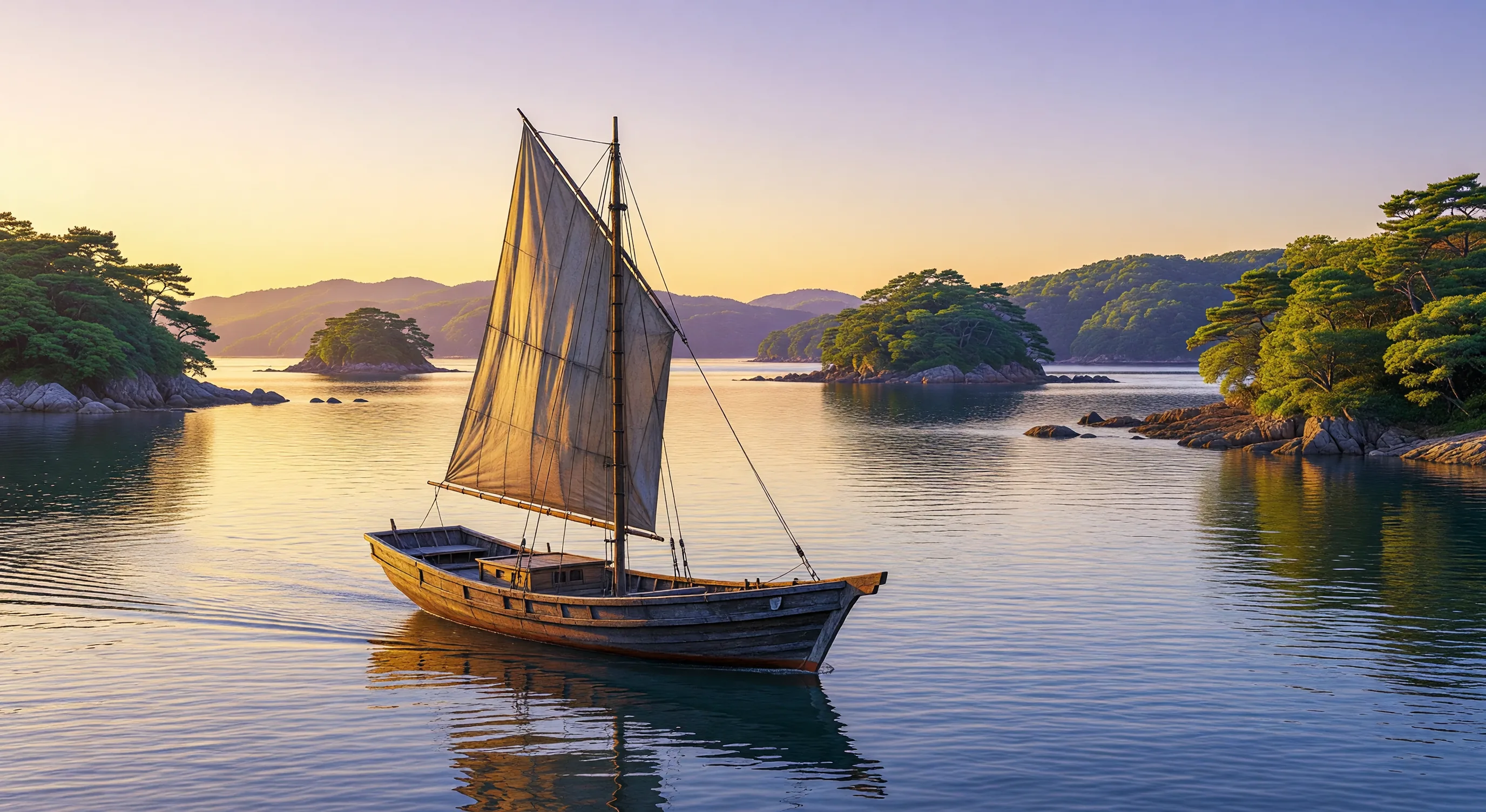
For centuries, the same vessels that carried trade goods between Japan's islands also carried culinary influences — fermented pastes from Kyushu, dried fish from Okinawa, and preserved kelp from Hokkaido becoming the foundational flavors of a cuisine shaped by the sea.
Okinawan Cuisine
Okinawan food is among the most distinctive in Japan, shaped by the Ryukyu Kingdom's trade relationships with China and Southeast Asia. Pork is celebrated in every part, slow-braised in soy and awamori rice spirit for the iconic rafute dish. Goya champuru — bitter melon stir-fried with tofu, egg, and Spam — reflects both traditional ingredients and postwar American influence. Awamori, Okinawa's aged distilled spirit, accompanies meals in the same way wine accompanies a European table.
- Champuru — stir-fry tradition
- Goya (bitter melon) dishes
- Rafute braised pork belly
- Awamori rice spirit
- Sea grapes (umibudo)
Northern Seafood
Hokkaido's cold, nutrient-rich waters produce seafood of extraordinary quality that defines northern Japanese cuisine. Sea urchin (uni) from Rishiri and Rebun islands is considered the finest in Japan — sweet, creamy, and without the metallic edge of lesser varieties. Crab — particularly hairy crab and king crab — appears in every form from raw to boiled to grilled. The island's dairy tradition, brought by Meiji-era settlers, yields fresh butter, aged cheese, and rich milk used in soups, pastries, and soft serve ice cream beloved across Japan.
- Hokkaido uni (sea urchin)
- Hairy crab and king crab
- Salmon and ikura (roe)
- Artisan dairy products
- Soup curry (Sapporo style)
Seto Sea Flavors
The Seto Inland Sea's calm, tide-flushed waters create ideal conditions for an abundance of prized seafood. Tai (sea bream) is the sea's signature fish — grilled whole, served as sashimi, or pressed into layered sushi alongside cooked rice and vinegar in the regional oshizushi tradition. Oysters from Hiroshima Bay, octopus from Akashi, and citrus-marinated raw fish from the islands of Ehime are essential to the region's table. The inland sea's many small fishing communities each maintain their own distinct preparations, making the Seto coast one of Japan's richest areas for culinary discovery.
- Tai (sea bream) in many forms
- Hiroshima oysters
- Akashi octopus
- Oshizushi pressed sushi
- Citrus-cured fish preparations
Music & Dance Traditions
The performing arts of Japan's island communities are among the country's most vital living traditions — rooted in ceremony, community, and the deepest sense of place.
Sanshin Music
The sanshin is Okinawa's three-stringed lute — a cousin of the Chinese sanxian that arrived via the Ryukyu trade routes and evolved into the spiritual heart of Okinawan musical culture. Its skin-covered body (traditionally python, now synthetic) produces a plaintive, buzzing tone unlike any other Japanese instrument. Every major Okinawan ceremony, from weddings to harvest festivals to the Eisa bon dance, is accompanied by the sanshin's unmistakable voice. Today, master players such as those of the Nomura-ryu and Yofuku-ryu schools maintain a repertoire of classical koten pieces alongside the popular minyō folk songs that have spread Okinawan music across Japan.
Eisa Dance
Eisa is Okinawa's answer to the Bon Odori dances performed across Japan during the August festival of the dead — but with a distinctly Okinawan ferocity and athleticism. Performers carry large taiko drums, smaller paarandaa drums, or dance empty-handed, moving in synchronized formations that alternate between explosive, stomping aggression and graceful, fluid gestures. The dances vary significantly between communities, with each village jealously maintaining its own choreography and musical style. The sound of multiple eisa groups converging on a narrow island street — drums thundering, sanshin ringing, voices calling — is one of the most visceral experiences in Japanese cultural life.
Ainu Upopoy
Upopoy — meaning "singing in a large group" in the Ainu language — refers to the rich tradition of communal Ainu song that was inscribed on UNESCO's Intangible Cultural Heritage list in 2009. Ainu music is characterized by circular breathing techniques, polyphonic layering, and the use of the tonkori zither and mukkuri jaw harp. Songs traditionally accompanied ceremonies honoring bears, salmon, and other animal spirits, or marked the stages of daily life from childbirth to death. The opening of the Upopoy National Ainu Museum in 2020 near Lake Poroto has created a major new venue for Ainu cultural transmission and performance.
Visiting Cultural Sites Respectfully
Japan's living cultural traditions depend on the respect and engagement of visitors. These guidelines will help you participate thoughtfully and meaningfully.
When visiting Shinto shrines and Buddhist temples across Japan's islands, approach the main gate (torii at shrines, sanmon at temples) with quiet reverence. At shrines, bow slightly before passing through the torii, then purify your hands at the temizuya water basin — ladle water over the left hand, then the right, then cup water in the left hand to rinse your mouth, and finally rinse the ladle handle before replacing it. At the main hall, toss a coin into the offering box, bow twice deeply, clap twice, offer a silent prayer, and bow once more. At Buddhist temples, incense offering is common — wave the smoke toward yourself to receive its purifying benefit, and never point or gesture with incense sticks. Remove your shoes when entering any interior sacred space, and keep voices low throughout the grounds. Photography of statues and altar areas is often prohibited — look for signs and when in doubt, ask.
Japan's smaller island communities — particularly those along the Seto Inland Sea and in Okinawa's outer islands — are tight-knit places where the line between public and private space can be different from what visitors expect. Always ask permission before entering someone's garden, fishing boat, or workshop, even if a door appears open. Shopping and eating locally is genuinely meaningful: small guesthouses, family-run izakayas, and village workshops depend on the income that tourism brings, and your choice to spend money there rather than at chain establishments makes a real difference. Learn a few words of Japanese — arigatou gozaimasu (thank you), sumimasen (excuse me), and itadakimasu (said before eating) — and local people will respond with warmth. In Okinawa, the local Ryukyuan dialect Uchinaguchi has different greetings, and even a single word learned shows respect for the distinct cultural identity islanders hold dear.
Photography in Japan's cultural spaces requires ongoing awareness and judgment. In many temples and heritage craft workshops, interior photography is prohibited by signs — always check before raising your camera. In festival settings, photography of performers is generally welcome but taking intrusive close-up shots without acknowledgment is considered rude. Never photograph private homes, people without implied or explicit consent, or sacred ritual objects at close range. In some Ainu cultural contexts, photography of spiritual ceremonies or objects is restricted out of respect for the sacred nature of the practice — follow the guidance of cultural center staff carefully. When photographing artisans at work, wait until they pause before approaching, and if you wish to photograph their process closely, ask through gesture or phrase. Share images respectfully online: avoid geotags on locations that are not tourist sites, and represent communities with dignity rather than as curiosities.
Attending Japan's island festivals as a visitor is a genuine privilege, and participation is often welcomed — but on the community's terms. At bon dances and Eisa performances, watch from designated viewing areas first and follow the lead of local people in any invitation to join. Festival foods and market stalls are open to everyone, and buying from them supports the community organizations that fund the celebrations. At religious festivals — Shinto matsuri with portable shrines (mikoshi) or Buddhist lantern ceremonies — participate with seriousness as well as joy: these are spiritual occasions, not performances staged for tourists. Dress modestly and avoid festival grounds while visibly intoxicated. At smaller village festivals, you may be the only foreign visitor — this is an honor, not an opportunity for selfies. Bring a small gift of food or drink if invited to join a community gathering, as this gesture of reciprocity is deeply understood.
Japanese communication relies heavily on context, silence, and non-verbal cues that may not be immediately legible to visitors from more verbally direct cultures. A hesitant "saa..." or a sharp inhalation through the teeth signals difficulty or polite refusal — not necessarily a "yes." Direct refusals are relatively rare in Japanese social interaction, so learning to read indirect communication will prevent misunderstandings. Pointing at people is considered rude; instead, gesture with an open hand, palm up. Beckoning is done with a downward wave rather than the upward curl familiar in the West. In Okinawa particularly, the local concept of ichariba choodee — "though we meet but once, we are as siblings" — means hospitality can be extraordinary: accept graciously and reciprocate with genuine gratitude rather than transactional courtesy. When dining, never stick chopsticks upright in rice (a funeral ritual), and pass food between chopsticks — both evoke death ceremonies and are deeply taboo.